What a Real Renovation Looks Like: Inside a Valencia Real Estate Investment
What a Real Renovation Looks Like: Inside a Valencia Real Estate Investment
Most discussions about real estate investments in Valencia focus on entry prices, yields, and market conditions. Those variables matter. But they don't explain where the return actually comes from.
In most value-add projects, it comes from the renovation itself — the decisions made about layout, light, and materials that determine whether a property performs above or below market once tenants move in.
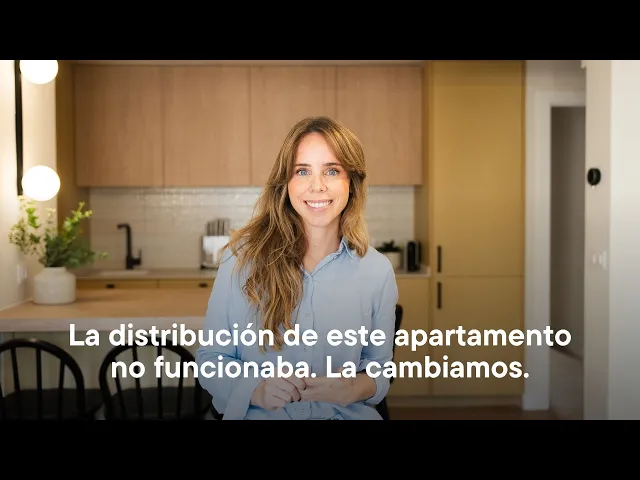
MAE44 is one of weVLC's completed property renovation Valencia projects, on Calle Manuela Estellés near Cabanyal and Malvarrosa. Almudena, the project manager on this property, walked us through the key decisions from acquisition to handover.
The Starting Conditions
When Almudena first assessed MAE44, the diagnosis was straightforward. The apartment had potential — but a floor plan that worked against it. Poor room distribution, wasted square metres, a layout that hadn't been designed around how anyone actually lives. It's a common profile in Valencia's older residential stock, especially in neighbourhoods with dense, historic building fabric.
The goal from day one: make every usable square metre earn its place.
Layout and Light
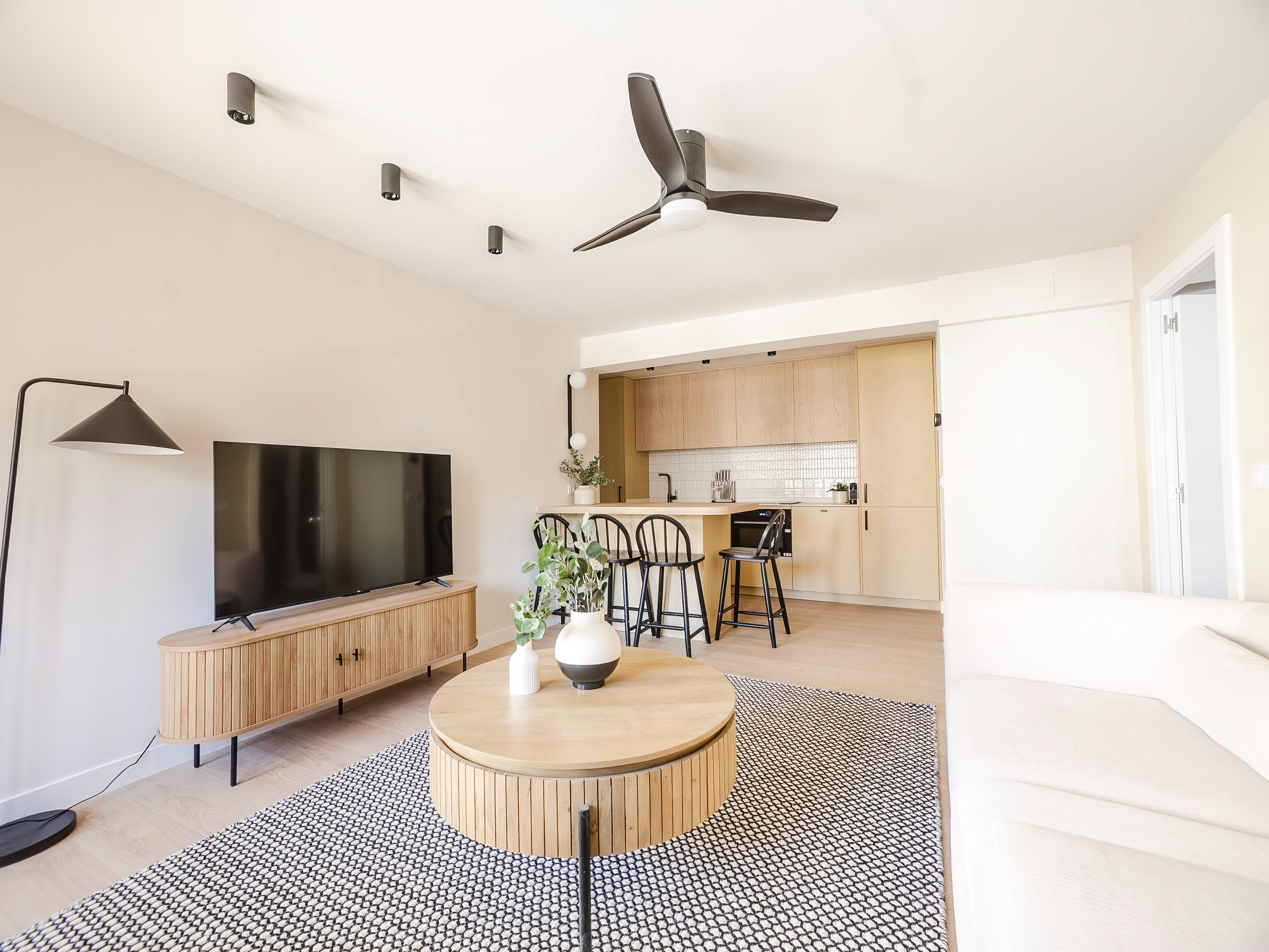
The redesign started with function, not aesthetics. The new floor plan was built around real occupancy — how people move through a space, where light enters, how rooms connect. Unnecessary partitioning came out. The result is a continuous feel throughout the apartment, with natural light reaching the whole interior.
When renovating property in Valencia, this has commercial weight as much as spatial value. A well-lit, logically arranged apartment rents faster, holds tenants longer, and shows better in listings. In Valencia's rental market — where supply in genuinely renovated stock is still tight — these details show up directly in occupancy.
Material Choices
The material selection at MAE44 was grounded in where the apartment actually is. The design draws on Cabanyal's architectural character — the ochre tones, the Valencian ceramic traditions — and reinterprets them into a finish that feels Mediterranean without being decorative for its own sake.
An apartment that visually belongs to its neighbourhood holds its appeal over time. It attracts tenants who are choosing Cabanyal deliberately: a growing segment of professionals and internationals drawn to the coastal location and the area's ongoing development. For investors, that means lower vacancy risk and stable long-term asset value.
The Outcome
The finished property is optimised, functional, and distinctive in its segment. The floor plan works. The light performs. The materials connect the apartment to the city it sits in.
MAE44 is one of more than 100 value-add real estate Valencia projects weVLC has completed across the city. The approach is the same each time: find properties where the gap between current state and potential is significant, close that gap through precise design and execution, and hand over an asset built to perform long-term.
For a full overview of how weVLC structures the acquisition, renovation, and management process, see the investment process page.
What a Real Renovation Looks Like: Inside a Valencia Real Estate Investment
What a Real Renovation Looks Like: Inside a Valencia Real Estate Investment
Most discussions about real estate investments in Valencia focus on entry prices, yields, and market conditions. Those variables matter. But they don't explain where the return actually comes from.
In most value-add projects, it comes from the renovation itself — the decisions made about layout, light, and materials that determine whether a property performs above or below market once tenants move in.
MAE44 is one of weVLC's completed property renovation Valencia projects, on Calle Manuela Estellés near Cabanyal and Malvarrosa. Almudena, the project manager on this property, walked us through the key decisions from acquisition to handover.
The Starting Conditions
When Almudena first assessed MAE44, the diagnosis was straightforward. The apartment had potential — but a floor plan that worked against it. Poor room distribution, wasted square metres, a layout that hadn't been designed around how anyone actually lives. It's a common profile in Valencia's older residential stock, especially in neighbourhoods with dense, historic building fabric.
The goal from day one: make every usable square metre earn its place.
Layout and Light
The redesign started with function, not aesthetics. The new floor plan was built around real occupancy — how people move through a space, where light enters, how rooms connect. Unnecessary partitioning came out. The result is a continuous feel throughout the apartment, with natural light reaching the whole interior.
When renovating property in Valencia, this has commercial weight as much as spatial value. A well-lit, logically arranged apartment rents faster, holds tenants longer, and shows better in listings. In Valencia's rental market — where supply in genuinely renovated stock is still tight — these details show up directly in occupancy.
Material Choices
The material selection at MAE44 was grounded in where the apartment actually is. The design draws on Cabanyal's architectural character — the ochre tones, the Valencian ceramic traditions — and reinterprets them into a finish that feels Mediterranean without being decorative for its own sake.
An apartment that visually belongs to its neighbourhood holds its appeal over time. It attracts tenants who are choosing Cabanyal deliberately: a growing segment of professionals and internationals drawn to the coastal location and the area's ongoing development. For investors, that means lower vacancy risk and stable long-term asset value.
The Outcome
The finished property is optimised, functional, and distinctive in its segment. The floor plan works. The light performs. The materials connect the apartment to the city it sits in.
MAE44 is one of more than 100 value-add real estate Valencia projects weVLC has completed across the city. The approach is the same each time: find properties where the gap between current state and potential is significant, close that gap through precise design and execution, and hand over an asset built to perform long-term.
For a full overview of how weVLC structures the acquisition, renovation, and management process, see the investment process page.
