Fallas de Valencia: Everything You Need to Know About the City's Most Important Festival
Every March, Valencia stops being a city and becomes something else entirely. Streets fill with monumental sculptures, the air shakes with the sound of daily pyrotechnic displays, and neighborhoods that spend the entire year in preparation finally reveal their work to the world. Fallas is not a tourist event layered onto city life — it is city life, compressed into nineteen days of fire, tradition, and collective energy.
If you are visiting Valencia for the first time during Fallas, or simply trying to understand what you are seeing, this guide covers everything: what Fallas actually is, the key moments of the festival calendar, and why it matters well beyond the spectacle itself.
What Is Fallas?
Fallas is Valencia's most important annual festival, celebrated from March 1 to March 19. During these weeks, the entire city transforms into an open-air exhibition filled with large-scale monuments built by local neighborhood commissions. Streets close, music fills the air, and daily life reorganizes itself around the celebration.
The tradition has deep roots. Centuries ago, carpenters burned their leftover wood at the end of winter as a way of welcoming spring and longer days. Over time, those simple bonfires evolved into crafted figures, and eventually into the monumental sculptures — called fallas — that define the festival today. In 2016, UNESCO recognized Fallas as Intangible Cultural Heritage of Humanity, not just for its scale, but for the depth of community involvement, craftsmanship, and tradition it sustains generation after generation.
Today, more than 700 fallas are built across Valencia every year. Each one is created by a neighborhood group called a casal faller, involves months of design, funding, and construction, and is intentionally built to be burned. That tension — between extraordinary creative effort and deliberate impermanence — is what gives Fallas its character.
The Key Dates and Moments
Fallas is not a single event. It is a sequence of distinct moments, each with its own tradition and atmosphere.
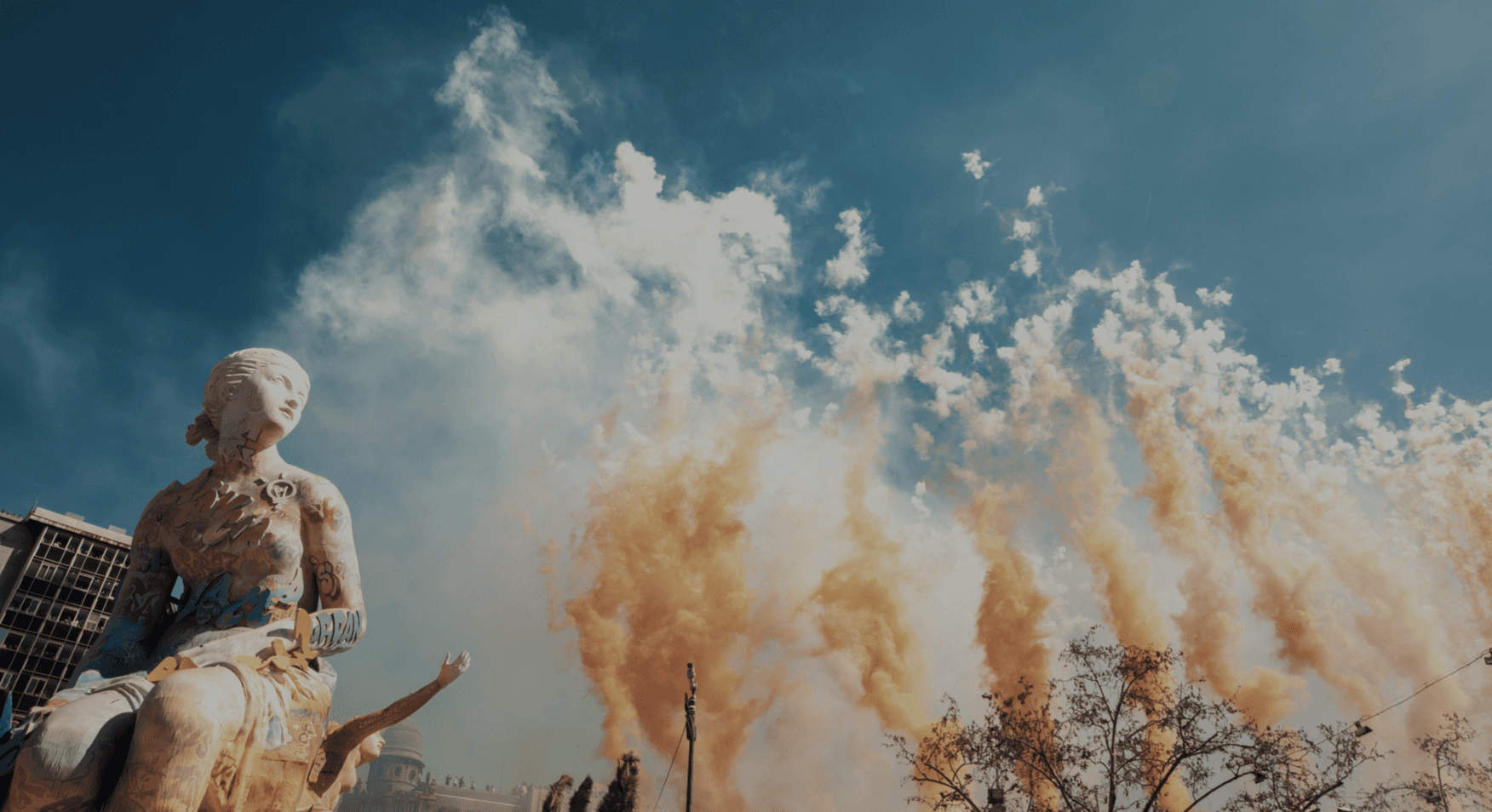
From March 1 through March 19, the Mascletà takes place every afternoon at 14:00 in Plaza del Ayuntamiento. This is a choreographed pyrotechnic performance focused entirely on rhythm and sound — not visual fireworks. Sequences of controlled detonations build in intensity, layer by layer, until the finale known as the terremoto produces a sustained ground-level vibration you can physically feel underfoot. Different professional pyrotechnic companies perform each day, and earning a spot on the official calendar is considered a mark of excellence in the industry. Crowds build around the plaza well before two o'clock, and the anticipation is part of the ritual.
La Plantà, on March 15 and 16, marks the official completion and installation of all monuments across the city. Cranes fill the streets as large sculptural sections are transported from workshops and assembled in their final locations. Once finished, they are formally presented to the public and evaluated by juries from the Junta Central Fallera — the festival's governing body — on criteria including artistic quality, originality, technical execution, and overall impact.
The Ofrenda a la Virgen de los Desamparados takes place on March 17 and 18. Thousands of falleras and falleros, dressed in full traditional Valencian attire, process through the city center toward Plaza de la Virgen, where they offer bouquets of carnations to a large wooden figure of the Virgin Mary, the patron saint of Valencia. Over the two days, these individual offerings are arranged into an immense floral mantle that gradually covers the entire figure — one of the most visually striking moments of the entire festival.
On the night of March 18, Nit del Foc takes place in the Turia Gardens. This is the festival's most important nighttime fireworks display — a large-scale pyrotechnic show combining aerial fireworks, synchronized sequences, and extended finales that draw tens of thousands of spectators. Where the Mascletà is about sound and ground-level intensity, Nit del Foc is about height, color, and visual composition.
La Cremà, on the night of March 19, brings everything to a close. Every monument across the city is deliberately burned. Children's fallas burn first, followed by the larger monuments, all under firefighter supervision. The final monument to burn is the City Hall falla, shortly before midnight. Months of design, funding, and craftsmanship end in one night — a symbolic act of renewal before the cycle begins again.
The People Behind the Tradition
Fallas is not produced by an institution. It is produced by the city itself, neighborhood by neighborhood.
The falleras are one of the most recognizable symbols of the festival: women and girls who represent each neighborhood commission in traditional Valencian dress inspired by 18th-century clothing. Their outfits — made from handwoven silk, embroidery, lace, and gold jewelry — can cost between €3,000 and €6,000. The signature hairstyle features three side buns secured with ornate combs and hairpins, often paired with heirloom jewelry passed down through generations. Being named Fallera Mayor — the highest representative role — is a position of genuine honor and responsibility within the community.
Every monument is created by specialists known as artistas falleros, who begin work months in advance. Neighborhood commissions define the theme and budget; the artists develop designs that combine sculpture, engineering, and satire — often commenting on current politics, public figures, or social debates. These monuments can reach over 20 meters in height and range from €20,000 to more than €1 million in total cost. They stand for only a few days before being burned.
Satire sits at the heart of Fallas. The exaggerated figures — called ninots — that make up each monument use humor and caricature to reflect the year's key debates. Before La Cremà, one ninot from each commission is displayed in a public exhibition, and citizens vote to save their favorite, allowing one piece of political commentary to escape the flames permanently. It is a tradition that reinforces public participation and reminds everyone that Fallas has always been, at its core, a form of social expression.
Why Fallas Matters for Understanding Valencia
There is no better moment in the year to understand Valencia than during Fallas. The festival reveals the character of the city in a way that ordinary days do not — the deep sense of neighborhood identity, the collective investment in shared culture, the coexistence of tradition and modernity, the pride in craft, and the willingness to burn something beautiful in the name of renewal.
For those who come to Valencia not just to visit but to understand its long-term potential — as a place to live, to invest, or to build something — Fallas offers an unfiltered view of what makes this city function. The same values that shape the festival — community commitment, long-term planning, and a deep attachment to place — are the same values that underpin how Valencia is growing as a city.
At weVLC, we work in this city every day. We see how the energy of Fallas connects to the rhythm of the real estate market, how neighborhoods with strong casales falleros tend to have strong community fabric, and how the city's ability to sustain a tradition of this scale reflects a deeper civic culture that supports long-term investment. If you want to explore what Valencia looks like beyond the festival, we are here to show you.
Fallas de Valencia: Everything You Need to Know About the City's Most Important Festival
Every March, Valencia stops being a city and becomes something else entirely. Streets fill with monumental sculptures, the air shakes with the sound of daily pyrotechnic displays, and neighborhoods that spend the entire year in preparation finally reveal their work to the world. Fallas is not a tourist event layered onto city life — it is city life, compressed into nineteen days of fire, tradition, and collective energy.
If you are visiting Valencia for the first time during Fallas, or simply trying to understand what you are seeing, this guide covers everything: what Fallas actually is, the key moments of the festival calendar, and why it matters well beyond the spectacle itself.
What Is Fallas?
Fallas is Valencia's most important annual festival, celebrated from March 1 to March 19. During these weeks, the entire city transforms into an open-air exhibition filled with large-scale monuments built by local neighborhood commissions. Streets close, music fills the air, and daily life reorganizes itself around the celebration.
The tradition has deep roots. Centuries ago, carpenters burned their leftover wood at the end of winter as a way of welcoming spring and longer days. Over time, those simple bonfires evolved into crafted figures, and eventually into the monumental sculptures — called fallas — that define the festival today. In 2016, UNESCO recognized Fallas as Intangible Cultural Heritage of Humanity, not just for its scale, but for the depth of community involvement, craftsmanship, and tradition it sustains generation after generation.
Today, more than 700 fallas are built across Valencia every year. Each one is created by a neighborhood group called a casal faller, involves months of design, funding, and construction, and is intentionally built to be burned. That tension — between extraordinary creative effort and deliberate impermanence — is what gives Fallas its character.
The Key Dates and Moments
Fallas is not a single event. It is a sequence of distinct moments, each with its own tradition and atmosphere.
From March 1 through March 19, the Mascletà takes place every afternoon at 14:00 in Plaza del Ayuntamiento. This is a choreographed pyrotechnic performance focused entirely on rhythm and sound — not visual fireworks. Sequences of controlled detonations build in intensity, layer by layer, until the finale known as the terremoto produces a sustained ground-level vibration you can physically feel underfoot. Different professional pyrotechnic companies perform each day, and earning a spot on the official calendar is considered a mark of excellence in the industry. Crowds build around the plaza well before two o'clock, and the anticipation is part of the ritual.
La Plantà, on March 15 and 16, marks the official completion and installation of all monuments across the city. Cranes fill the streets as large sculptural sections are transported from workshops and assembled in their final locations. Once finished, they are formally presented to the public and evaluated by juries from the Junta Central Fallera — the festival's governing body — on criteria including artistic quality, originality, technical execution, and overall impact.
The Ofrenda a la Virgen de los Desamparados takes place on March 17 and 18. Thousands of falleras and falleros, dressed in full traditional Valencian attire, process through the city center toward Plaza de la Virgen, where they offer bouquets of carnations to a large wooden figure of the Virgin Mary, the patron saint of Valencia. Over the two days, these individual offerings are arranged into an immense floral mantle that gradually covers the entire figure — one of the most visually striking moments of the entire festival.
On the night of March 18, Nit del Foc takes place in the Turia Gardens. This is the festival's most important nighttime fireworks display — a large-scale pyrotechnic show combining aerial fireworks, synchronized sequences, and extended finales that draw tens of thousands of spectators. Where the Mascletà is about sound and ground-level intensity, Nit del Foc is about height, color, and visual composition.
La Cremà, on the night of March 19, brings everything to a close. Every monument across the city is deliberately burned. Children's fallas burn first, followed by the larger monuments, all under firefighter supervision. The final monument to burn is the City Hall falla, shortly before midnight. Months of design, funding, and craftsmanship end in one night — a symbolic act of renewal before the cycle begins again.
The People Behind the Tradition
Fallas is not produced by an institution. It is produced by the city itself, neighborhood by neighborhood.
The falleras are one of the most recognizable symbols of the festival: women and girls who represent each neighborhood commission in traditional Valencian dress inspired by 18th-century clothing. Their outfits — made from handwoven silk, embroidery, lace, and gold jewelry — can cost between €3,000 and €6,000. The signature hairstyle features three side buns secured with ornate combs and hairpins, often paired with heirloom jewelry passed down through generations. Being named Fallera Mayor — the highest representative role — is a position of genuine honor and responsibility within the community.
Every monument is created by specialists known as artistas falleros, who begin work months in advance. Neighborhood commissions define the theme and budget; the artists develop designs that combine sculpture, engineering, and satire — often commenting on current politics, public figures, or social debates. These monuments can reach over 20 meters in height and range from €20,000 to more than €1 million in total cost. They stand for only a few days before being burned.
Satire sits at the heart of Fallas. The exaggerated figures — called ninots — that make up each monument use humor and caricature to reflect the year's key debates. Before La Cremà, one ninot from each commission is displayed in a public exhibition, and citizens vote to save their favorite, allowing one piece of political commentary to escape the flames permanently. It is a tradition that reinforces public participation and reminds everyone that Fallas has always been, at its core, a form of social expression.
Why Fallas Matters for Understanding Valencia
There is no better moment in the year to understand Valencia than during Fallas. The festival reveals the character of the city in a way that ordinary days do not — the deep sense of neighborhood identity, the collective investment in shared culture, the coexistence of tradition and modernity, the pride in craft, and the willingness to burn something beautiful in the name of renewal.
For those who come to Valencia not just to visit but to understand its long-term potential — as a place to live, to invest, or to build something — Fallas offers an unfiltered view of what makes this city function. The same values that shape the festival — community commitment, long-term planning, and a deep attachment to place — are the same values that underpin how Valencia is growing as a city.
At weVLC, we work in this city every day. We see how the energy of Fallas connects to the rhythm of the real estate market, how neighborhoods with strong casales falleros tend to have strong community fabric, and how the city's ability to sustain a tradition of this scale reflects a deeper civic culture that supports long-term investment. If you want to explore what Valencia looks like beyond the festival, we are here to show you.
